Avital has been living in cooperative housing since 2020. Avi enjoys walking long distances, cycling, and high-effort vegan baking.
When people hear that I live in a 7 person coöp where we hold nightly communal dinners, they usually react with a polite mix of horror and curiosity. You only cook once a week, they ask? How does grocery shopping work? What if someone cooks something you don’t like?
I figured it would be a fun exercise for this blog to walk through the food system currently employed in my household, which consists of 7 adults living in Somerville Massachusetts. It may seem complicated, but what I want to emphasize is how much time this system saves me. In addition to the priceless community-building and friendship-making that having dinner with your friends every day brings me, I logistically save so much time by never having to go to the grocery store(!) and only needing to cook once a week.
First, some basics. Most folks in my house cook dinner and perform post-dinner clean-up (dishes, scrubbing the counters, sweeping, taking out the trash) once a week. We have one person at the moment who cleans twice a week rather than cooking, and one person who correspondingly cooks twice a week but never cleans. One house member is the ‘steward’; they prepare a grocery list of staples and special requests and shop at our local Market Basket once a week. Finally, we have a ‘mealplanner,’ who does not live in the house but participates in our food system. Every dinner, we strive to make approximately 15 portions of food, which is theoretically enough for people to have both dinner and leftover lunch the next day. Each meal must contain a sufficiently large serving of vegan protein and of vegetables at a minimum. We also buy enough groceries for folks to have a variety of breakfast, fruit, and snacking options. We frequently have guests at dinner; we just ask that cooks be given sufficient notice so that enough food can be prepared.
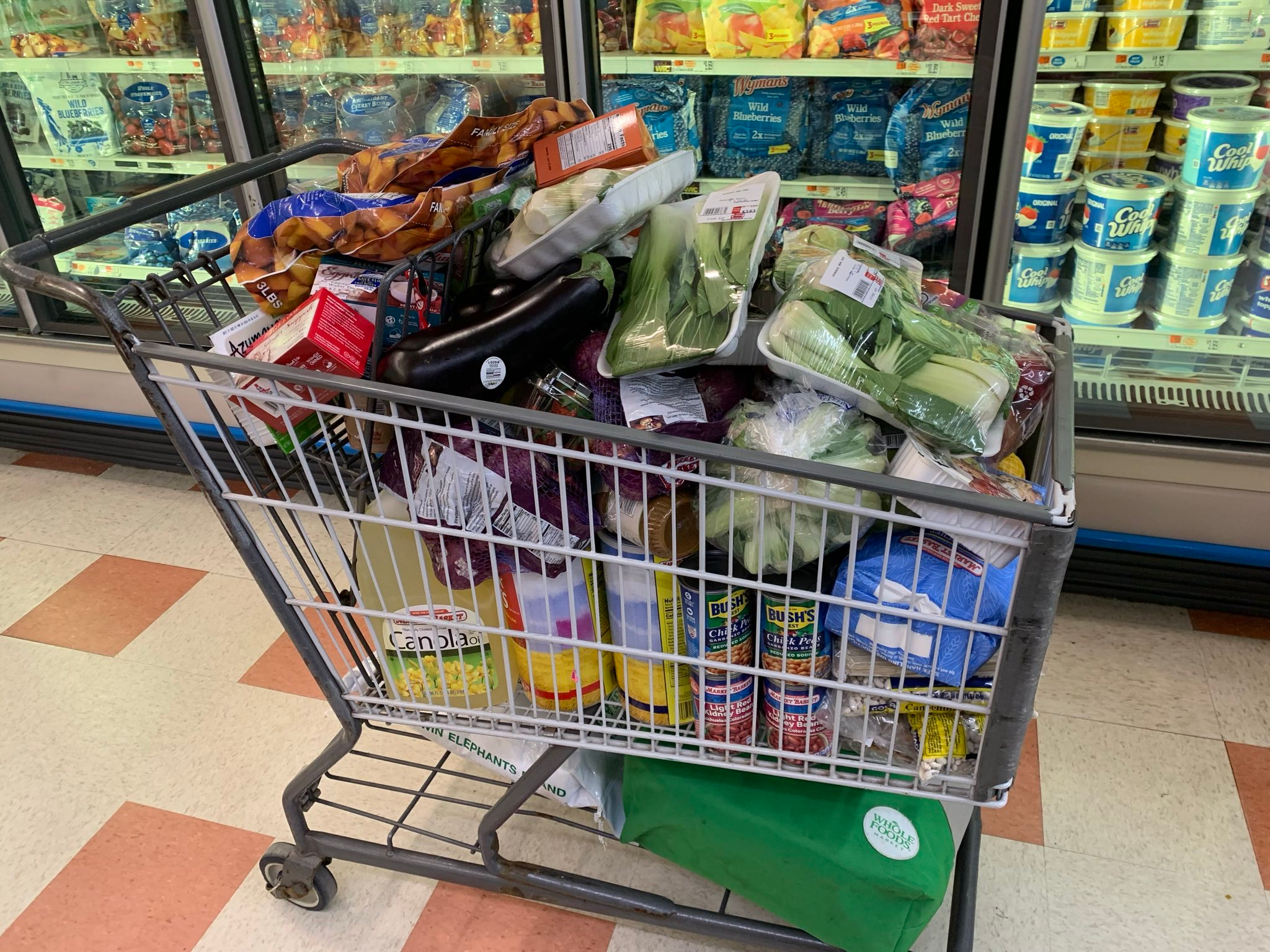 Our shopping cart at Market Basket
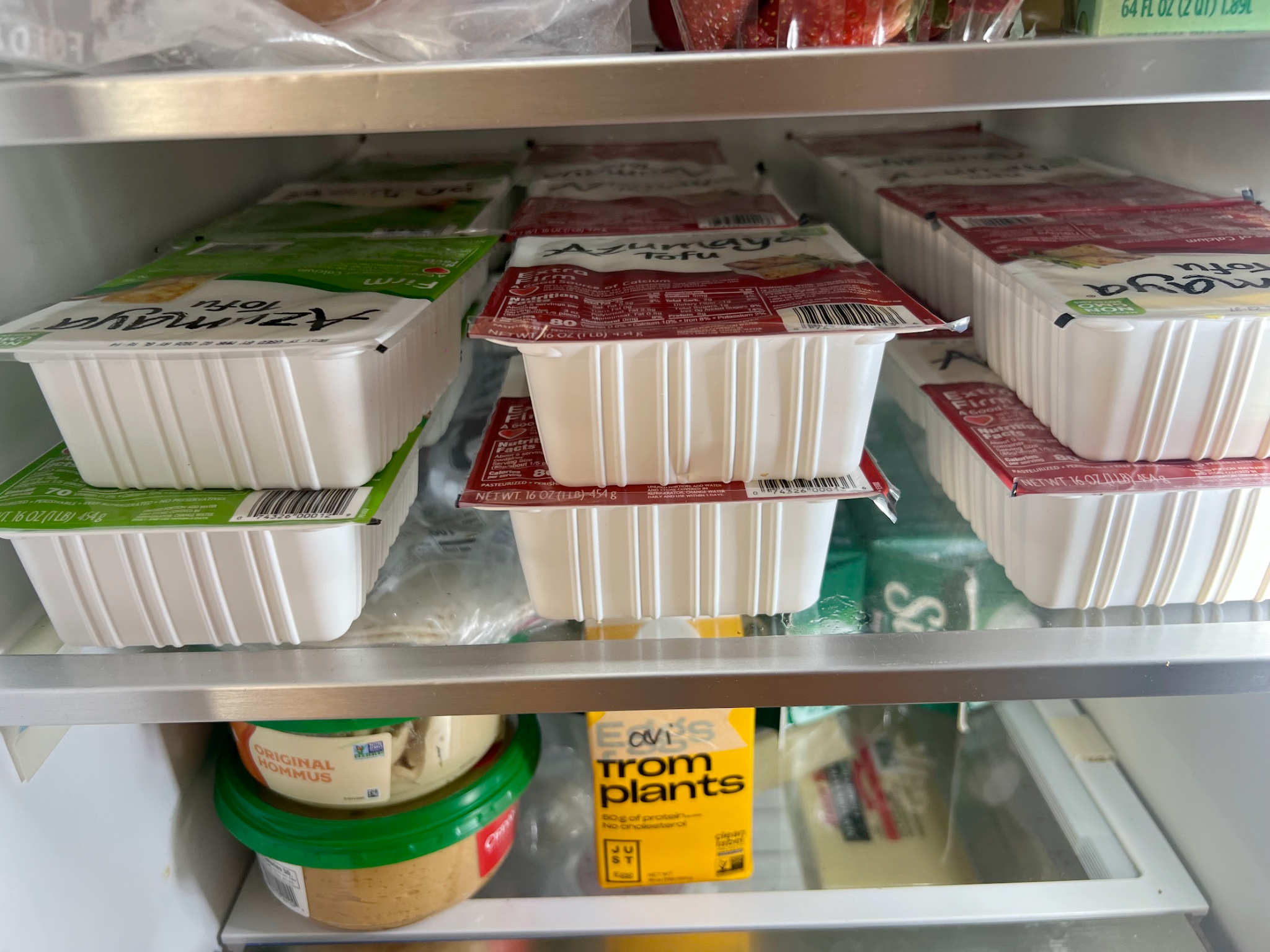 The tofu shelf in our fridge (communal)
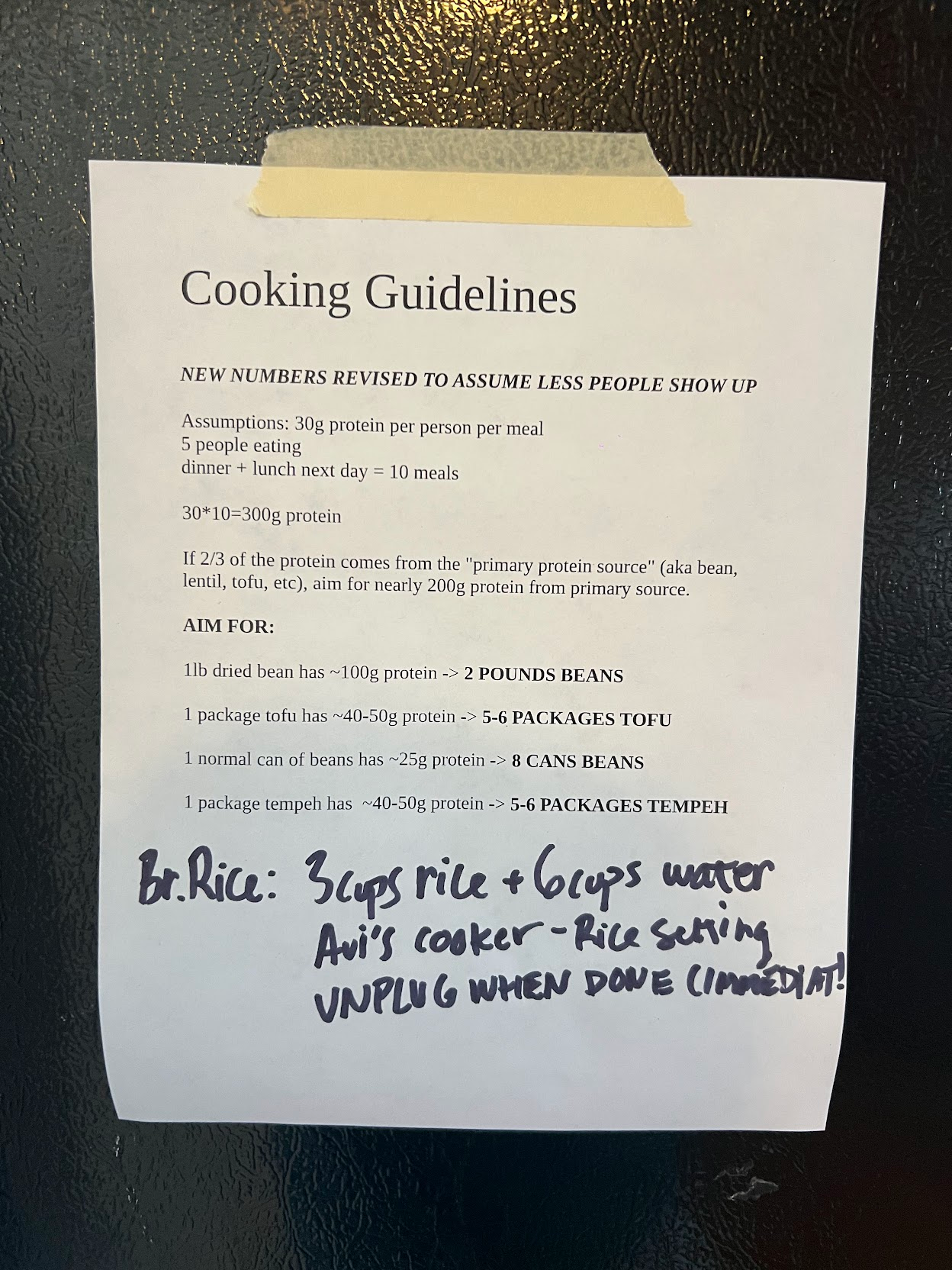 cooking guidelines, posted on the fridge (Note the bonus rice cooker usage instructions)
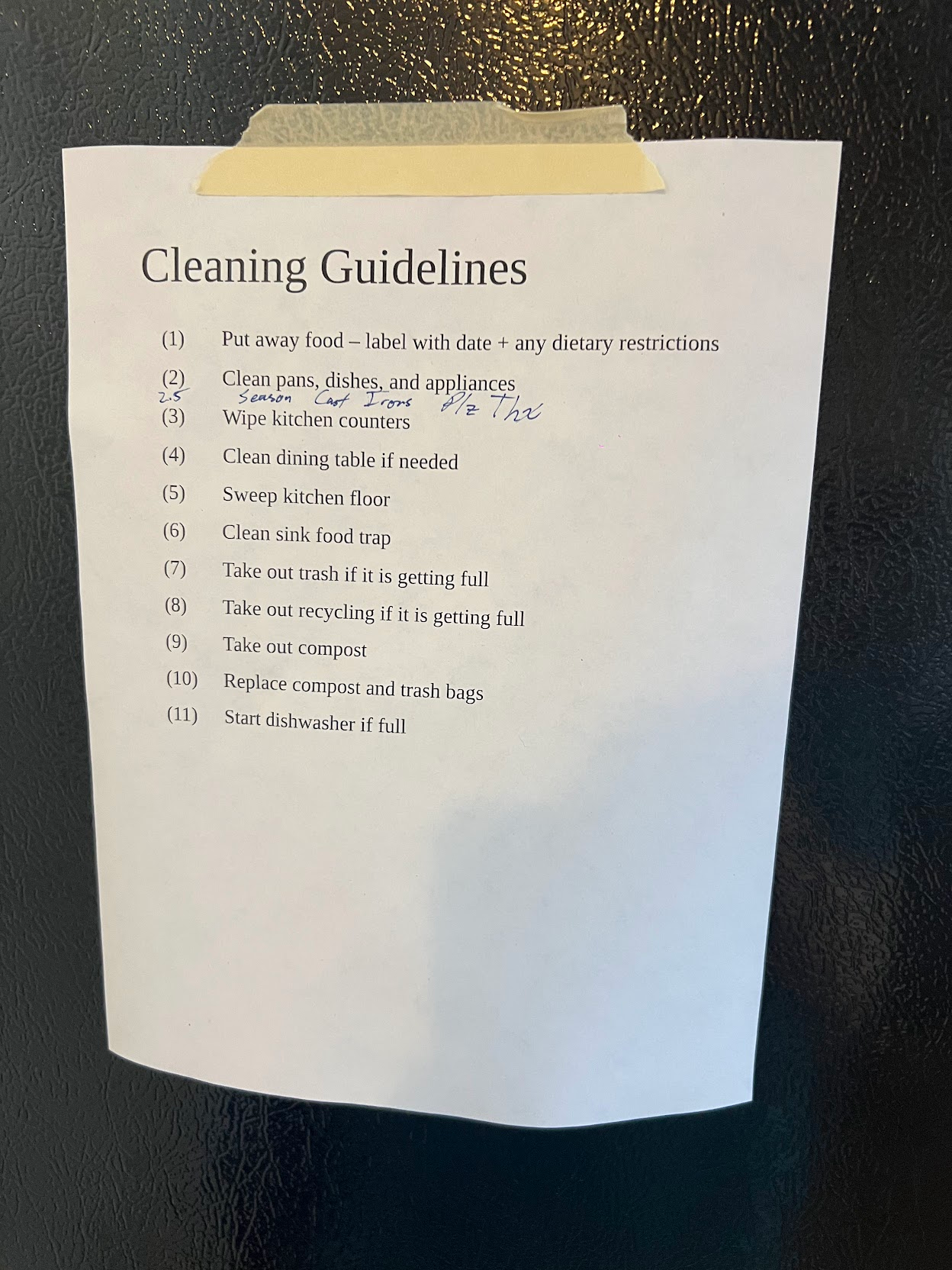 cleaning guidelines, also posted on the fridge
B., our steward, prepares the grocery list weekly. We buy a mix of staples (mostly vegan with some vegetarian additions, as well as gluten free grain options for B., who can’t eat gluten) and ingredient requests for dinners that week. Our house treasurer has tracked our spending over the last 6 months, and we spend right around our budget of 50 dollars a week per person on food and grocery store purchases, which includes all communally purchased food in the house; essentials such as soap, shampoo, and toilet paper; and a maximum optional spending of 25 dollars a meal for each dinner (to supplement with fresh veggies for example). This accounts for my entire food spending most week, which is quite economical. We don’t have strict guidelines for what we will and will not buy as a house, but we try to adhere to some heuristics. We buy mostly ingredients and whole foods and limit processed foods. If we buy something communally, we make sure it’s something that can meaningfully be shared. For example, we don’t generally buy very small and expensive units of produce that only one person could have (or pre-made cookies). We prefer to buy the less expensive version of an item unless there’s a good reason not to. It’s a wonderful feeling for the house to be full of a wide variety of nutritious food at all times and to have the opportunity to sample many different meals and ingredients. To me, there’s a psychological element of food security and of intertwining my life with my housemates that feels like perhaps the most delightful part of this communal experience. We are not all at dinner every single day (indeed, one can request a ‘late’ - a container packed with a portion of food), but this system ensures there will always be several people to chat with over delicious food at 6PM.
I took pictures of our dinners for one week (in full transparency, this was more like over 10 days since I forgot a couple of days) to showcase the wonderful array of foods we eat! Not all the pictures are great quality because I am not a great photographer, but I promise the food was tastier than it looks (The nice photographs were taken by my housemates :) ). In honesty, I enjoy most of the meals we get to eat. On the occasion where someone makes a food I do not care for, after trying the dinner I will supplement with some leftovers or peanut butter toast. It’s not too different from occasionally trying a new recipe yourself and finding out that you do not care for it. I cook on Sundays, and spend approximately 1.5 hours cooking and an additional 30 minutes cleaning up. In exchange for 2 hours of work a week, I never have to buy groceries and get to eat homemade delicious dinner every other day of the week! Pretty good bargain, if you ask me.
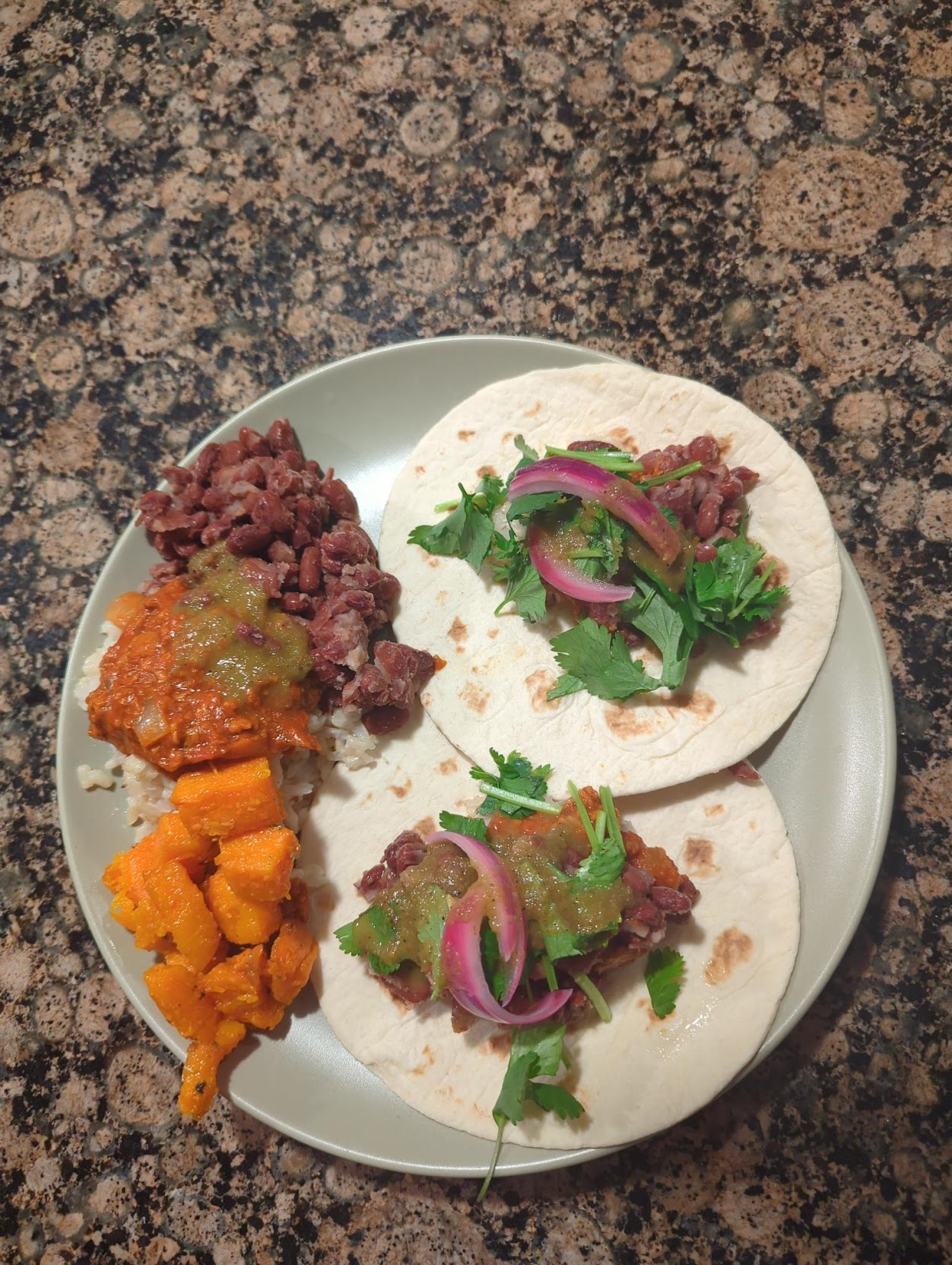 Day 1: Tacos with refried red beans and veggies garnished with pickled onions on corn and wheat tortillas
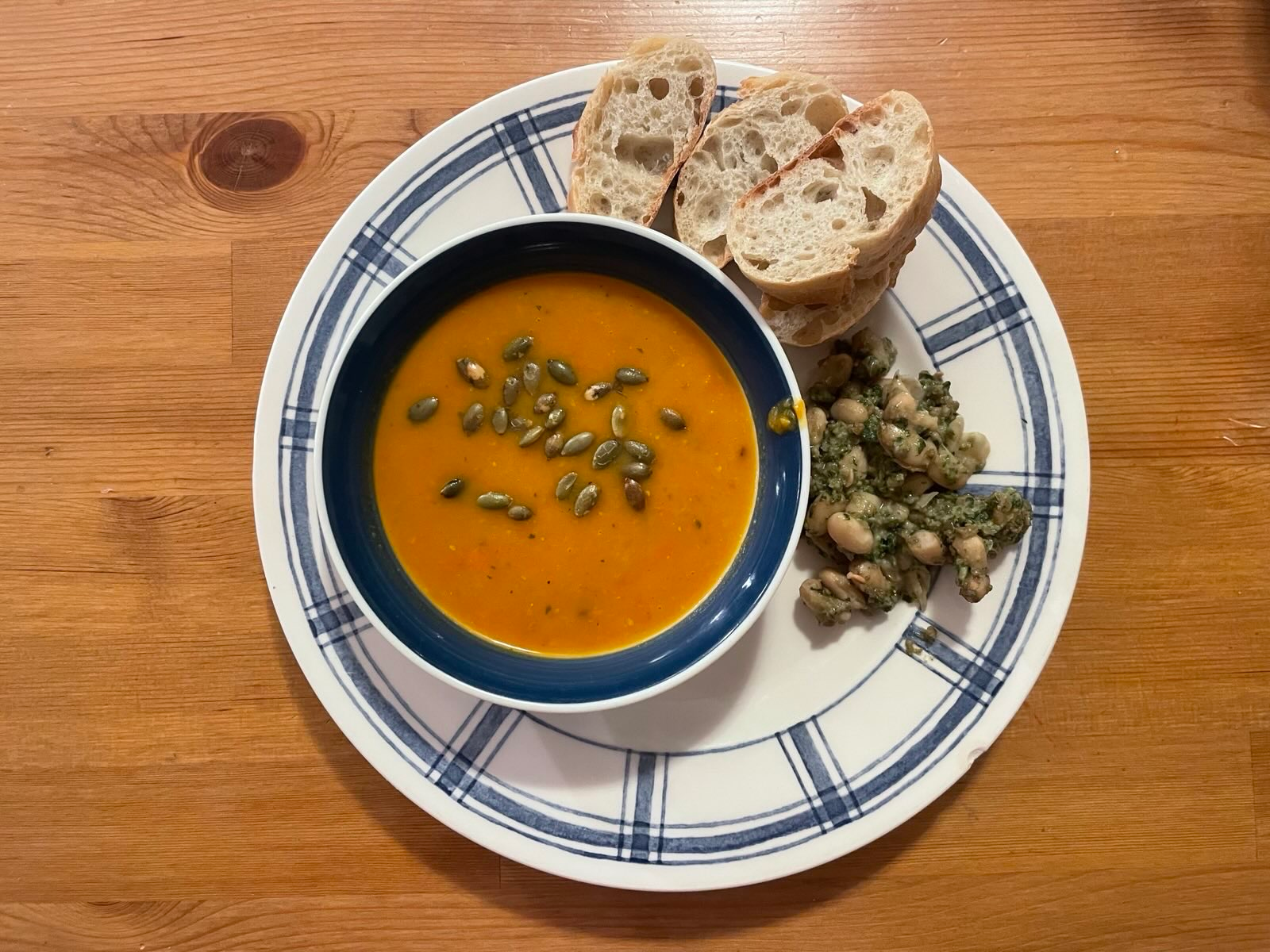
Day 2: Butternut squash soup, white beans with pesto, bread
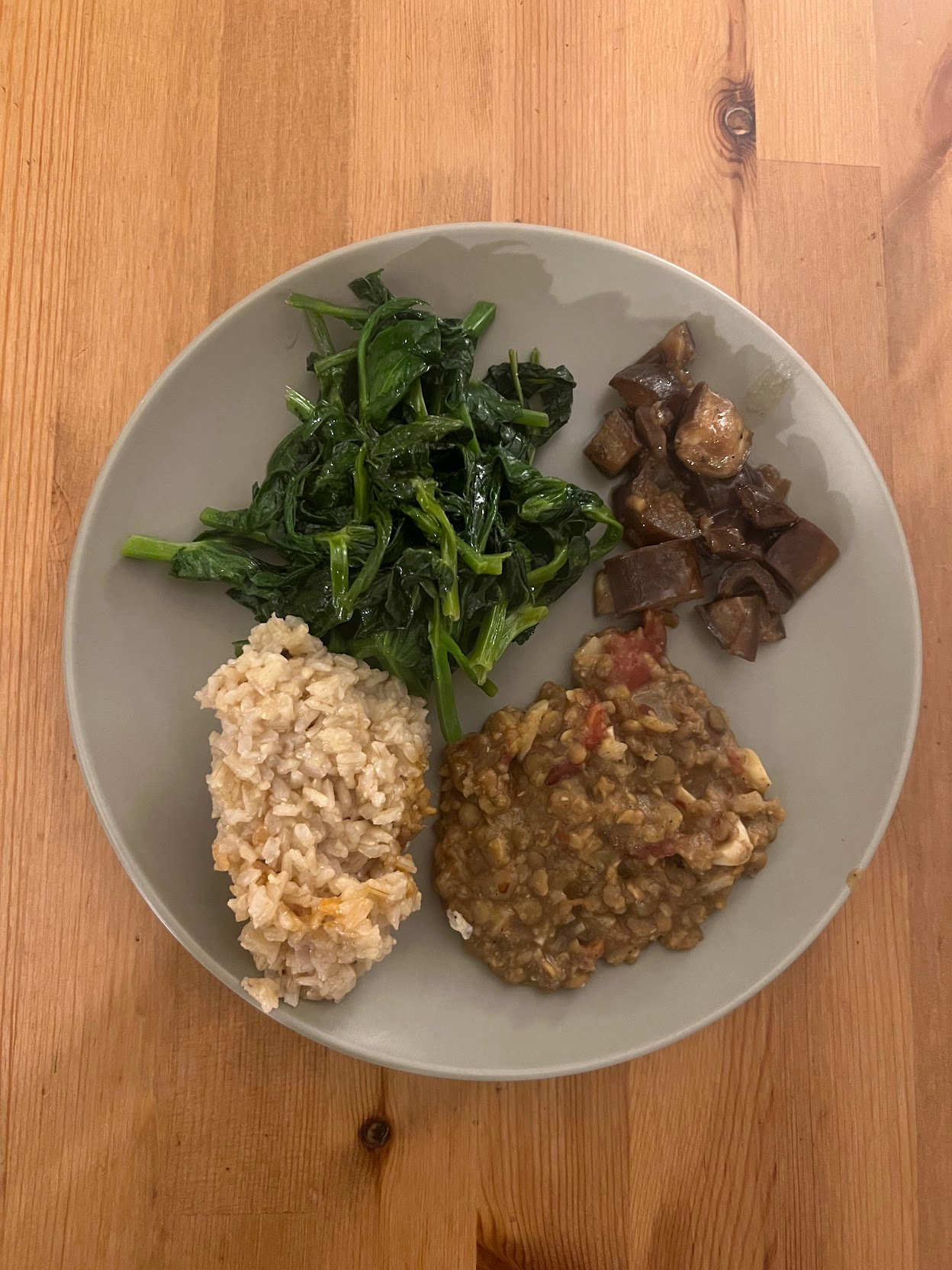 Day 3: brown rice, pea shoots with garlic, red lentil dal, eggplant
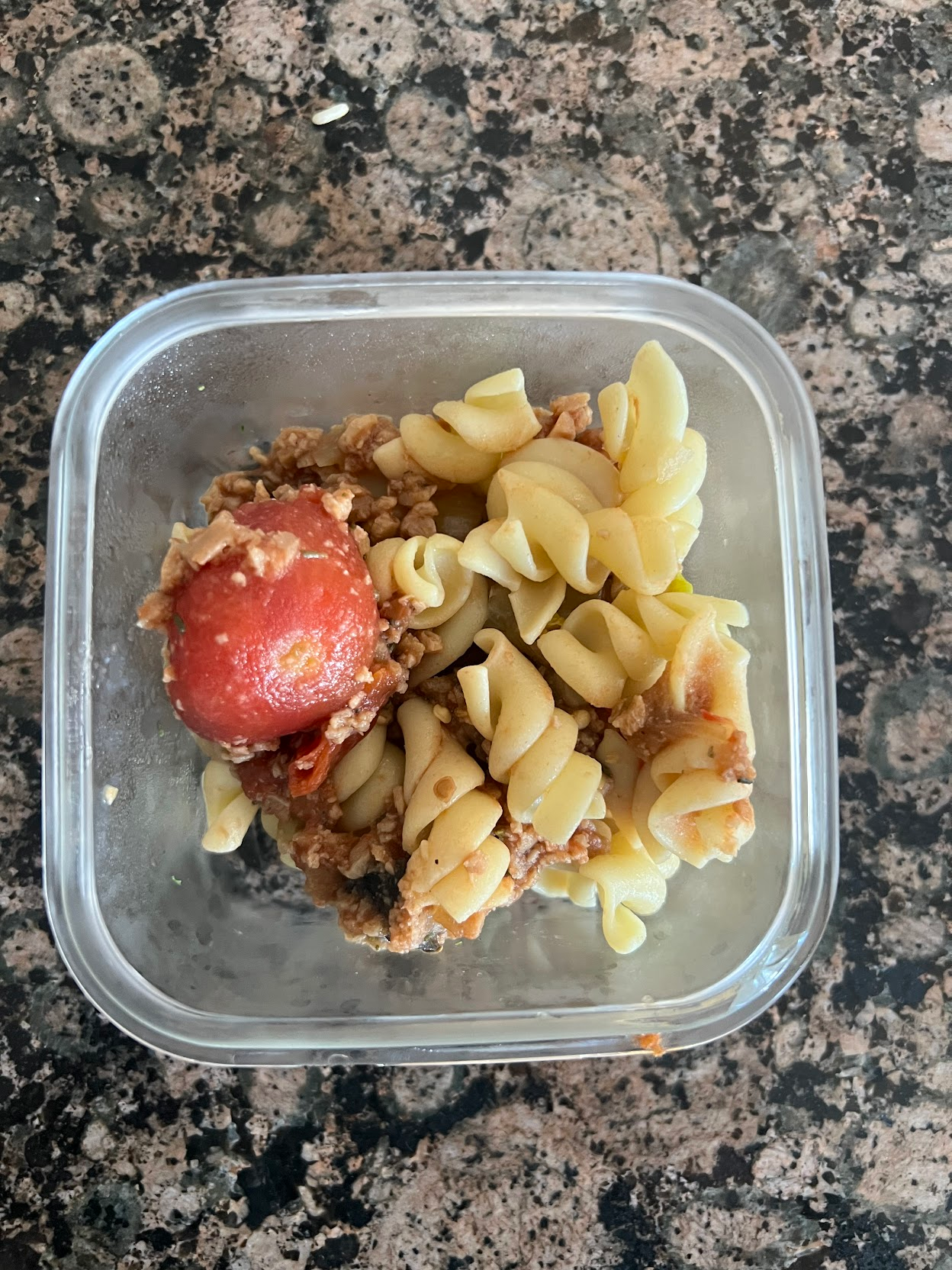 Day 4: pasta (with gluten free option), textured vegetable protein and tomato sauce
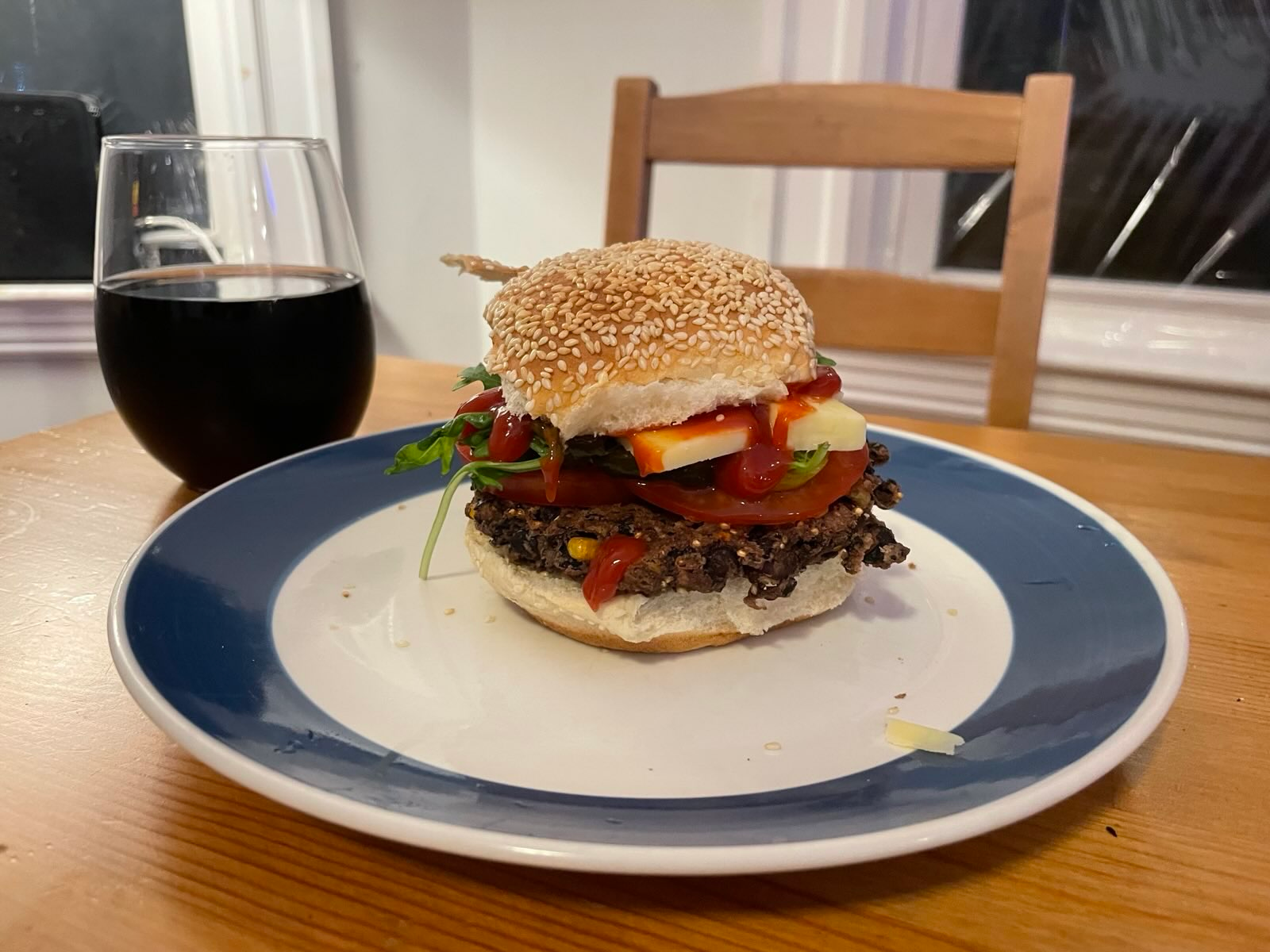 Day 5: homemade bean burger with optional cheese and salad on the side
 Day 6: veggie and tofu dumplings
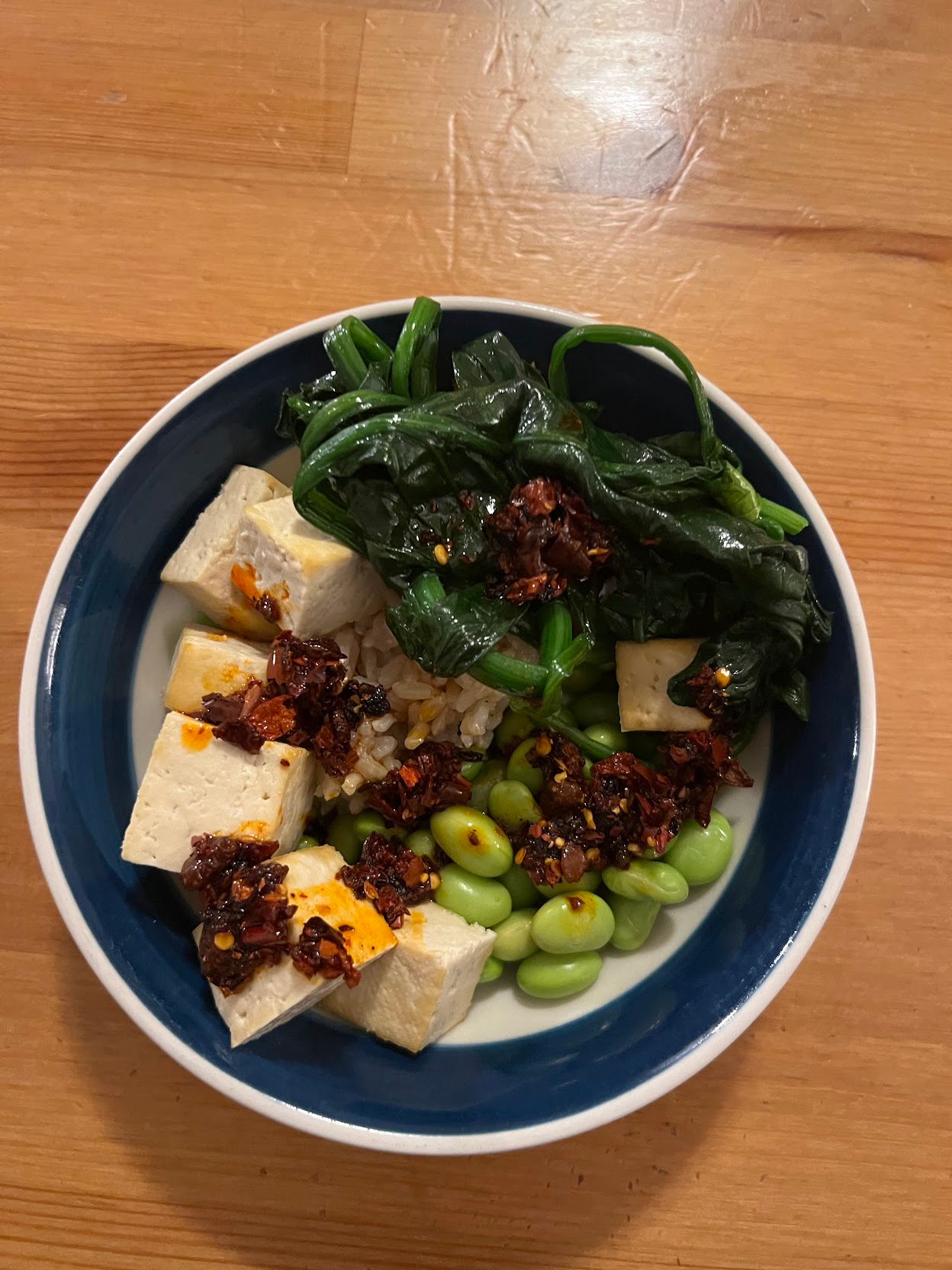 Day 7: tofu, edamame, yu choy, brown rice topped with chili crisp
In summary, I would highly recommend you start a cooking rotation with your friends and/or housemates! In my opinion, it just makes sense. It’s cheaper and labor-saving, and you get to be delighted by a nice thing that someone has done for you, every single day of the week.
If you have questions for this author or about the blog more generally, please reach out to info@conviviality-cooperatives.com. If you wish to propose or submit your own article, please see our submissions instructions.